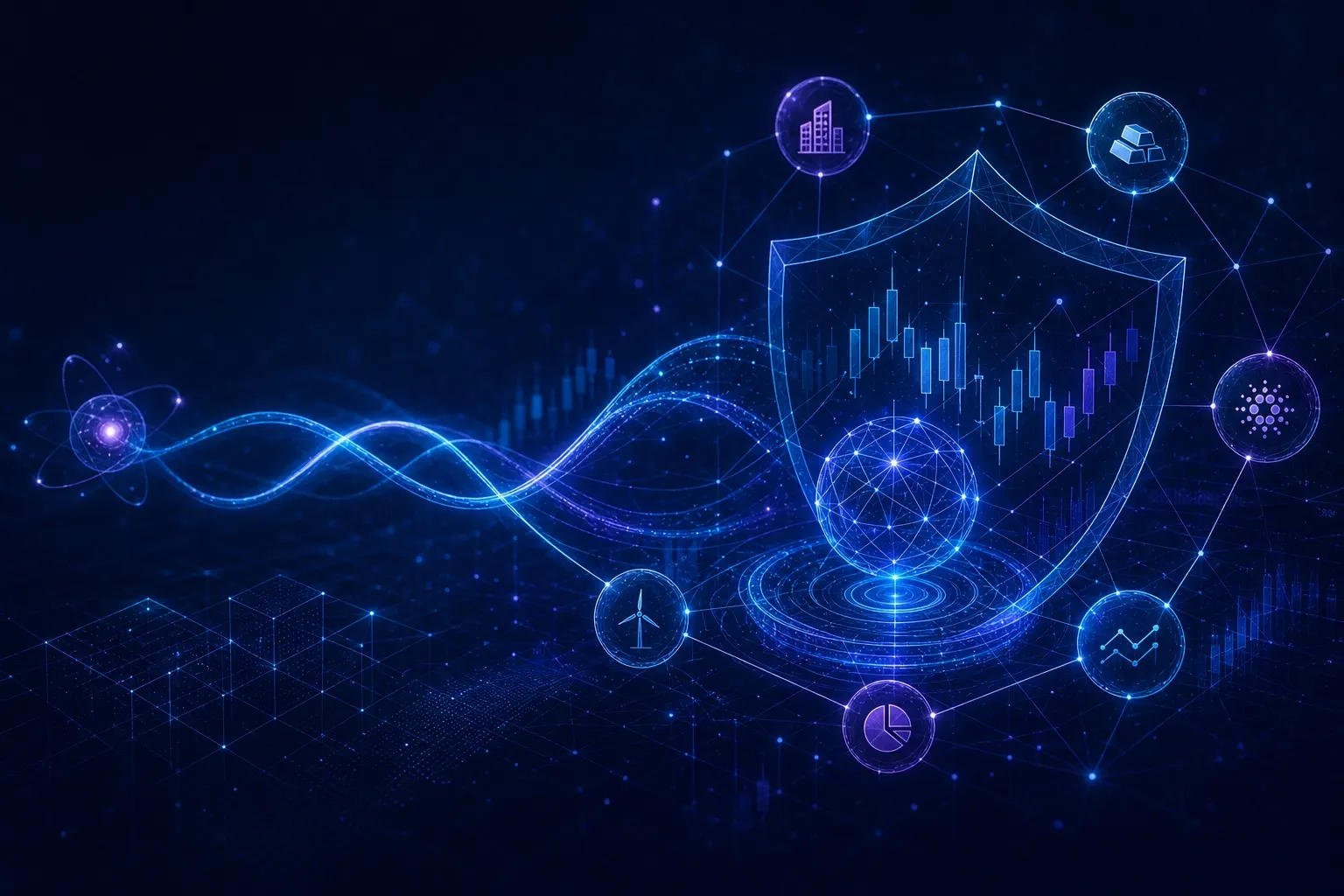
The world of finance is built on complex models that attempt to predict market movements, assess risk, and optimize investment strategies. For decades, classical computers have been the bedrock of this industry, running simulations and crunching numbers. However, as financial instruments become more complex and markets grow more interconnected, we are beginning to hit the limits of classical computation. Enter quantum computing, a paradigm shift with the potential to redefine what's possible in financial modeling.
This post contains affiliate links. We may earn a small commission at no extra cost to you.The Quantum Advantage in Finance
Classical computers, which use bits representing either 0s or 1s, struggle with problems that have a massive number of variables and potential outcomes. Financial modeling, especially in areas like derivatives pricing and portfolio optimization, is exactly this type of problem. Quantum computers, on the other hand, use qubits. Thanks to the principles of superposition and entanglement, qubits can represent multiple values simultaneously, allowing them to explore a vast solution space at speeds unimaginable for even the most powerful supercomputers.
This capability is particularly transformative for Monte Carlo simulations, a cornerstone of risk analysis. A quantum approach could run these simulations with far greater speed and accuracy, giving institutions a much clearer picture of their risk exposure.
Key Areas of Transformation
Quantum computing isn't a single magic bullet; it's a powerful tool that will enhance several key areas within finance.1. Portfolio Optimization
One of the most challenging tasks in finance is creating an optimal investment portfolio—one that maximizes returns for a given level of risk. This is a complex combinatorial problem that becomes exponentially harder as the number of assets increases. Quantum optimization algorithms, like the Quantum Approximate Optimization Algorithm (QAOA), are perfectly suited for this. They can analyze a vast array of assets and correlations to identify optimal allocations that are simply out of reach for classical machines. To get a better grasp on the fundamentals, a solid book like Quantitative Finance For Dummies can provide a great foundation.
2. Derivatives Pricing and Hedging
Pricing complex derivatives like options and swaps requires solving intricate mathematical equations. The Black-Scholes model, while foundational, has limitations. Quantum algorithms can handle more sophisticated models with more variables, leading to more accurate pricing and more effective hedging strategies. This allows financial institutions to manage their risk more precisely.
3. Fraud Detection and Security
Beyond modeling, quantum computing will also bolster the security of the financial system. While quantum computers pose a threat to current encryption standards, the development of quantum cryptography and Quantum Key Distribution (QKD) promises a new era of ultra-secure transactions. Furthermore, quantum machine learning algorithms can analyze transaction data to identify fraudulent patterns with a level of sophistication that current systems cannot match. For those interested in the broader impact of technology on finance, The Future of Finance offers compelling insights into this evolution.
The Road Ahead
While the promise is immense, we are still in the early days of quantum finance. The hardware is nascent, and the algorithms are still being refined. However, major financial institutions and tech companies are investing billions in research and development.
For investors and professionals looking to stay ahead of the curve, now is the time to learn. Understanding the basics of both quantum mechanics and financial principles is crucial. Engaging with modern trading platforms like Fidelity or Interactive Brokers can provide a practical understanding of today's market mechanics, which is the foundation upon which quantum models will be built. The revolution won't happen overnight, but the groundwork is being laid for a financial system that is faster, smarter, and more secure than ever before.